Cluster:
Building Digital Literacy
Citation:
Davis K. (2026, March 29). Who’s Who in the Building Digital Literacy Research Cluster: Katlynne Davis. Digital Life Institute. https://www.digitallife.org/whos-who-in-the-building-digital-literacy-research-cluster-katlynne-davis/
 Copy to Clipboard
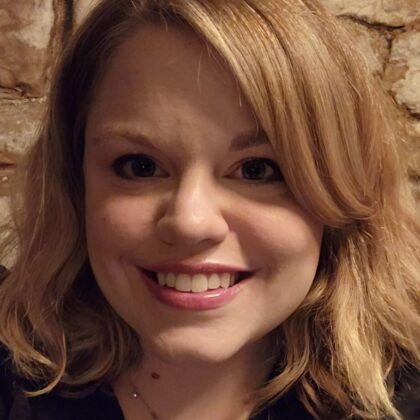
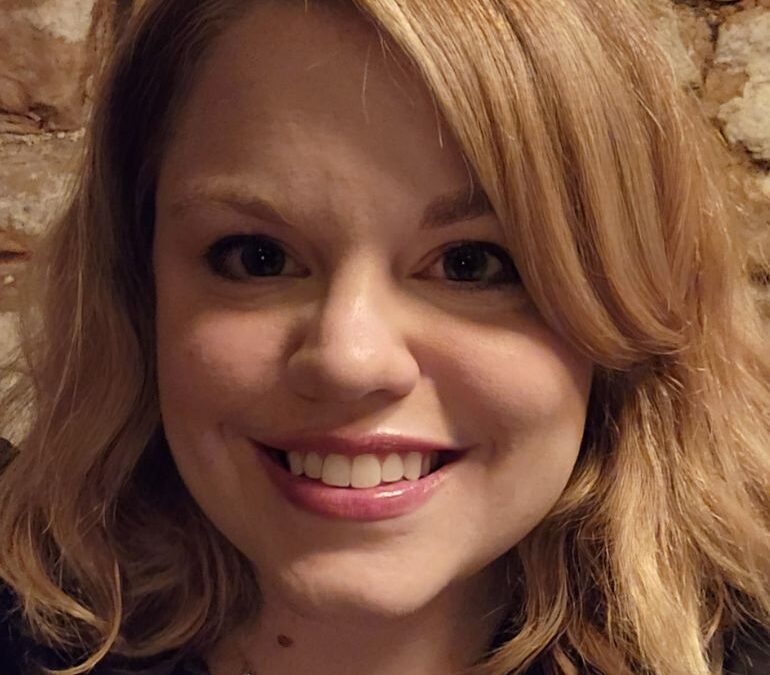
Please introduce yourself to our readers.
Thanks so much for this opportunity to share a bit about myself! I’m an Assistant Professor of Professional Writing at the University of St. Thomas in St. Paul, MN where I teach courses in technical and professional writing, user experience, business writing, and professional editing. As a researcher, I’m particularly interested in the ways that digital platforms shape what the work of technical and professional communicators looks like, and also how we ascribe value to this work. In one of my projects, I observed and interviewed content developers working for a national mental health nonprofit to identify the different kinds of labor that they were engaged in. I also study the labor that is part of instructors’ approaches to using or consider using digital platforms, such as generative AI, in their teaching.
To go back in time, I’ve been connected to the Building Digital Literacy (BDL) research cluster before it was part of the Digital Life Institute, as have a few other current BDL colleagues! In 2018, I was a second-year graduate student at the University of Minnesota when I was invited by my advisor, the incomparable Ann Hill Duin, to join a group that was then called the Emerging Technologies Research Collaborative (ETRC). We’d meet every few weeks to chat about all things digital technology-related and to translate our interests into projects. It’s been an honor to see the group evolve and grow over time into the BDL cluster, but what has been most valuable to me is getting to learn from and collaborate with such brilliant, kind people over time!
What drew you to digital literacy, and what personal or professional moment made you realize this work matters?
This first question takes me back to my pre-teen to early teen years when I would spend an unfortunate amount of time on the family computer chatting with friends on AOL instant messenger (AIM) and writing blog posts on Xanga (and downloading too much music from LimeWire, of course). As a teenager at that time, it was appealing to have so many options for connection and expression, options that weren’t previously accessible to me. You could construct an identity for yourself through little things like away messages or the design of a Xanga or MySpace page. More importantly, other people saw these things and could interact with you. While I know I’m not alone in my experiences of the early 2000s internet, that time had a deep impression on me. Reading and writing became more dynamic, colorful, and alive. The internet definitely looks different now, but that time has stuck with me and played a role in my later interest in digital literacy.
In thinking about how digital literacy work matters, I’m reminded of one of the times I taught a digital rhetoric course as a graduate student. I decided to update my readings from a previous semester and assign three chapters from Ruha Benjamin’s Race After Technology. I may have selfishly wanted dedicated time to read the book in depth. But I remember how powerful Benjamin’s book was for me at that moment; she’s so skillful at exposing the ways that racist logics have been coded into digital technologies, as is the case with discriminatory predictive algorithms and biased facial recognition software. Benjamin’s work led us to some powerful conversations in class about biases that are baked in to technological design and the significant harm people of color experience via digital technologies. These discussions are memorable to me because they underscore how digital literacies do not just include skill-centered knowledge about using tools to accomplish tasks. Part of living a digital life involves having ongoing conversations about how technological design continues to harm those with marginalized identities.
What is one project, publication, or accomplishment that you’re especially proud of, and what impact do you hope it has achieved for your field?
I’m proud of all of the projects I’ve worked on with my Building Digital Literacy (BDL) colleagues! If I have to pick, I’d like to shout out the 2025 special issue of Communication Design Quarterly on digital life (vol. 12, issue 2) that I co-edited with BDL colleagues and friends, Mollie Stambler and Saveena (Chakrika) Veeramoothoo. Our idea for this issue came out of many conversations we’d had in BDL about what digital literacy means and how we talk about it in communication design fields. As a conceptual lens, digital literacies articulate how we critically engage with digital technologies, but we acknowledge that literacy may carry damaging ideological assumptions and may not capture the complexity of living in a digital world. In our introduction, we offer digital life as a guiding framework for examining the diversity of embodied digital experiences. We asked others in the field to help us reconceptualize the role digital literacy occupies in our fields and to consider what a move toward digital life might look like.
The articles included in the issue cover such a wide range of contexts, from tactical transnational activism in the Chinese diaspora to the digital experiences of tracking health data via FemTech devices (and so many more amazing topics — go read them!). I’m proud of this special issue because my co-editors and I were able to start a conversation with others in the field that highlights how deeply integrated digital technologies are in our lives, often in ways that are both valuable and inequitable. I’m also proud that the work behind this issue was a collaborative effort! This was my first experience guest editing a special issue and I learned so much from my co-editors throughout the process. Working on a project like this also underscored how strong the end result can be when you work with others and establish an effective collaborative process: being open to ideas, drawing from your own strengths and expertise, and just being kind. I hope that this special issue reinforces the need to focus on social justice and lived experience in studies of digital life, especially right now when these concepts are being openly criticized.
What’s one question, challenge, or possibility in digital literacy that you’re most excited about today (or to explore next if you have the opportunity)?
I know we’re all probably a bit AI-weary, but I’ve been asking myself a few questions lately about AI: What types of writing and design tasks are we willing to hand over to generative AI? Why these things instead of others? Who is telling us we have to use AI and for what end goals? I know so many of us in TPC are asking these questions. I’m hoping reflecting on these questions might help me better understand my position on generative AI and how that translates into my pedagogy. It’s frustrating to hear messaging that students absolutely must have generative AI skills to be successful on the job market and then also hear that corporations are cutting jobs to instead fund AI data centers. It’s even more frustrating to learn about the environmental impacts of AI data centers and how AI tools are used by ICE for surveillance. The scale and speed at which the AI industry expands is concerning, but so are the narratives around AI use that suggest that instructors and students don’t have much of a choice but to use these platforms – that feels especially insidious.
I’ve been learning a lot from Jennifer Sano-Franchini, Megan McIntyre, and Maggie Fernandes’ “Refusing Generative AI in Writing Studies.” This has been a really helpful resource for me because the authors front generative AI’s harm while also noting that refusal consists of varied stances rather than one single approach. I’m currently teaching a course that is meant to prepare technical writing students for the professional world, so I’ve been returning to these ideas quite a bit and considering how (or whether) to integrate them into my pedagogy. Even though there’s a lot to be frustrated with regarding AI, our conversations about it surface what we value about writing instruction and why it matters, which are definitely conversations worth having.