
Cluster:
Building Digital Literacy
Citation:
Campbell J.L. (2026, March 29). Use Case: Leveraging GenAI to Transform Consumer Inquiries into Conversational Language. Digital Life Institute. https://www.digitallife.org/use-case-leveraging-genai-to-transform-consumer-inquiries-into-conversational-language/
 Copy to Clipboard
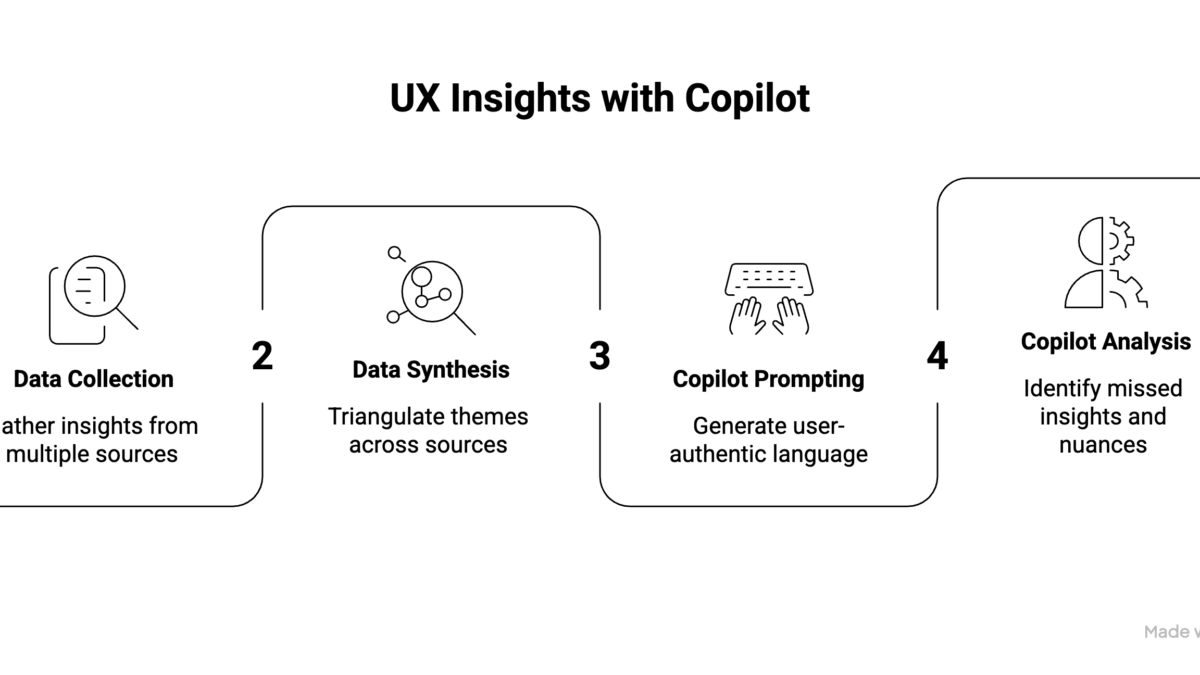
In my UX design work, I used Copilot to accelerate the transformation of qualitative research findings into actionable insights. I was responsible for generating conversational phrases and prompts that a target user might naturally use when interacting with a digital interface. To ground this work in real user behavior, I first collected and analyzed data from three different sources: a literature review I conducted on my own of patient concerns, year-to-date call summary notes, and Net Promoter Score (NPS) survey verbatims to understand the types and topics users inquired about.
After synthesizing these materials into a combined dataset, I was able to triangulate the data and identify themes that cut across all sources—patterns that reflected user needs, expectations, and communication styles.
Once I had completed my initial qualitative analysis, I used Copilot to help translate these themes into user‑authentic language. I prompted the tool with each theme and asked it to rephrase the concept as a question, phrase, or conversational utterance that the target user might realistically say. This step allowed me to quickly generate a wide range of naturalistic phrasing options that aligned with the linguistic patterns I had observed in the data.
Copilot also served as a secondary analytic partner. I asked it to “act like a qualitative researcher,” provided the combined dataset, and requested that it identify any additional insights or details I might have missed. While I reviewed all suggestions critically, this process helped surface nuances and edge cases that enriched my understanding of user behavior. The tool did not replace my analysis, but it expanded and validated it — helping me move from raw qualitative data to a polished UX deliverable more efficiently.
By integrating Copilot into this workflow, I was able to produce a set of 284 conversational design insights that were grounded in research, aligned with user language, and delivered within a tight project timeline. This use case illustrates how generative AI can support UX practitioners by accelerating synthesis, enhancing pattern recognition, and enabling rapid iteration — while still relying on human judgment to ensure accuracy, relevance, and ethical interpretation.