
Cluster:
Building Digital Literacy
Citation:
Duin A.H. (2026, January 29). Who’s Who in the Building Digital Literacy Research Cluster: Ann Hill Duin. Digital Life Institute. https://www.digitallife.org/whos-who-in-the-building-digital-literacy-research-cluster-ann-hill-duin/
 Copy to Clipboard
Please introduce yourself to our readers.
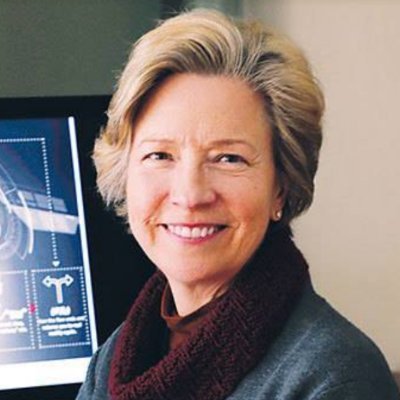
Thank you for the honor of being asked to respond to questions as part of the Who’s Who in Building Digital Literacy project. Over nearly four decades of research and teaching at the University of Minnesota (UMN), I had the privilege of leading in the development of new graduate programs, collaborating with students on professional research, and connecting students with international scholars and industry leaders. I served as Professor of Writing Studies and Graduate-Professional Distinguished Teaching Professor at the University of Minnesota where my technical and professional communication research and teaching focused on digital literacy, technical augmentation, analytics, collaboration, and workplace writing futures. In 2021 I received both the Ronald S. Blicq Award for Distinction in Technical Communication from the IEEE Professional Communication Society and the J. R. Gould Award for Excellence in Teaching from the Society for Technical Communication. As now Professor Emerita, I continue to serve as a scholar of collaboration and shared leadership, studying the deployment of technologies in ways that work to transform lives and organizations.
What drew you to digital literacy, and what personal or professional moment made you realize this work matters?
I began service as an assistant professor in 1986, the first year of the University of Minnesota Rhetoric department’s first graduate program, the MS in Technical Communication. I secured a grant for our first computer lab and began to offer courses in these “high tech” labs, inviting graduate students to join me in the study of digital literacy. Technological change over time–from desktop to mobile to Web 2.0 to immersive/wearable computing to generative AI–has provided a great opportunity for me to engage critically with this landscape to ensure that educational innovations are appropriate for an institution’s mission and goals for its students.
Quite memorable was my design and implementation of the University of Minnesota’s first online graduate level course in 1996, Rhet 8110: Theory and Research in Audience Analysis. Amid intense concern regarding “distance” learning, I was required to meet every week throughout the term with a Graduate School committee tasked with monitoring such innovation. I approached scholarly skepticism through conducting empirical research on digital literacy, receiving a national award for resulting scholarship on the culture of distance education.
I next served 15 years in higher education administrative roles including Vice Provost and Associate Vice President for Information Technology where my commitment to digital literacy resulted in collective vision and action: a virtual university, business intelligence/academic analytics initiatives, and inter-institutional partnerships supported by emerging technologies.
What is one project, publication, or accomplishment that you’re especially proud of, and what impact do you hope it has achieved for your field?
The Building Digital Literacy research cluster.
I am grateful for incredible scholars who have influenced so many on our quest to build digital literacy: Cindy Selfe, Andrea Lunsford, Lisa Ede, Rachel Spilka, Lee-Ann Kastman Breuch, Laura Gurak, Stuart Selber, Kelli Cargile Cook, Marjorie Rush Hovde, Kathryn Northcut, Eva Brumberger, and many others.
My relationship with digital life / digital literacies represents the core research focus of my entire academic professional career. I have worked to build digital literacy in K-12, college, graduate, corporate, and civic settings in the U.S. and abroad. I returned as a professor in 2012 and soon received this invitation: “You’ve been selected to join the Glass Explorer Program, a group of bold, creative individuals who want to help shape the future of Glass.” I bought a personal pair and developed a grant for “reframing” writing pedagogy and digital literacy. Graduate students expressed interest in this effort, and together we established the Wearables Research Collaboratory, a collaborative research group dedicated to discovering and developing new knowledge in the domain of emerging technologies.
Most importantly, I reached out to Dr. Isabel Pedersen (Professor and then Canada Research Chair in Digital Life, Media, and Culture). Together we established the Building Digital Literacy (BDL) research cluster, part of the now Digital Life Institute, an international research network of multidisciplinary scholars studying the social implications of disruptive digital technologies. We invited national and international graduate students and faculty to join this research, and they designed instructional units for student exploration and/or possible curation of collections on emerging technologies at the Fabric of Digital Life, a cultural analytics database that tracks the emergence of embodied computing platforms. This collaboration has generated numerous research investigations focused on the development of student digital literacy. Most recently involvement with BDL led Isabel Pedersen and I to write Writing Futures: Collaborative, Algorithmic, Autonomous (Springer, 2021) and Augmentation Technologies and Artificial Intelligence in Technical Communication: Designing Ethical Futures (Routledge, 2023).
The impact of the Building Digital Literacy research cluster astounds me. Professors, professionals, and graduate students meet bi-weekly throughout the academic year to tackle the challenges of emerging technologies.
What’s one question, challenge, or possibility in digital literacy that you’re most excited about today (or to explore next if you have the opportunity)?
Digital Life.
Building digital and AI literacy requires deep coordination and collaboration; moreover, it demands shared leadership. Therefore, I reached out to my BDL research colleagues, asking them this question. Among their responses:
- Gustav Verhulsdonck: Agent experience. We see polarization with AI-generated stances, where people get the Hawthorne effect together with algorithmic amplification.
- Daniel Hocutt: AI in the loop. Tech in the loop of the human. It’s about augmentation.
- Jessica Campbell: Digital twins, especially as it relates to health care.
- Mollie Stambler: Entangled literacies. Digital literacy is health literacy.
- Jason Tham: Tension with AI while it’s being adopted; social, environmental, and cognitive impact. Slow pedagogy and reflective methodology.
- Lee-Ann Kastman Breuch: Ethical uses of AI in the classroom; slow pedagogy.
- Katlynne Davis: AI as a tool of control and surveillance. Connecting conversations about AI to what’s going on currently in the Twin Cities (ICE).
Digital life is personal and professional. All things digital influence all aspects of life. I continue to integrate increasing amounts of immersive technologies, often beginning with great excitement while also endeavoring to practice responsible use. I know that each device – wearable, carryable, implantable, ingestible, embeddable, robotical, ambient – has or will have great impact. I continue to focus on the future, because building digital literacy is imperative to function now and in the future.